Download PDF Slaughterhouse: Chicago's Union Stock Yard and the World It Made, by Dominic A. Pacyga
Yes you're right; this publication that is provided in this site is in the soft documents. However, it does not mean that it will reduce the content of the book. It specifically includes the advantages. You could duplicate the soft apply for your personal gadget and review it every single time you want. Slaughterhouse: Chicago's Union Stock Yard And The World It Made, By Dominic A. Pacyga is constantly being one of the recommended publications to check out, by many individuals worldwide.
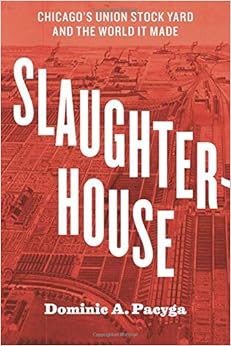
Slaughterhouse: Chicago's Union Stock Yard and the World It Made, by Dominic A. Pacyga

Download PDF Slaughterhouse: Chicago's Union Stock Yard and the World It Made, by Dominic A. Pacyga
Welcome once again, we always invite the visitor to be in this site. Are you the beginner to be visitor? Never mind. This site is in fact readily available and appropriate for everyone, Furthermore, the individual who actually requires ideas and also sources. By this condition, we constantly make updates to get every little thing brand-new. The books that we gather and also give in the listings are coming from lots of sources inside and also outside of this nation. So, never ever be doubt!
This location is an online publication that you can locate as well as enjoy many type of book brochures. There will certainly come a number of differences of just how you discover Slaughterhouse: Chicago's Union Stock Yard And The World It Made, By Dominic A. Pacyga in this web site as well as off library or the book shops. However, the significant factor is that you might not go for long minute to seek for guide. Yeah, you need to be smarter in this modern-day era. By innovative innovation, the internet collection as well as shop is given.
Yeas, this is good news to know that Slaughterhouse: Chicago's Union Stock Yard And The World It Made, By Dominic A. Pacyga has exposed again. Many people have been waiting on this writer functions. Even this is not in your much-loved book, it will certainly not be that mistake to attempt reviewing it. Why should be doubt to obtain the brand-new book referral? We always refer a book that can be required for all people. So by doing this, when you should understand even more concerning the Slaughterhouse: Chicago's Union Stock Yard And The World It Made, By Dominic A. Pacyga that has actually been provided in this site, you have to join to the web link that we all advise.
By this problem, you might not need to be worried. This book will aid you in obtaining the very best source of your problem as well as determination. Also this publication is a brand-new coming book, it will not men that the interest is less. You can compare to the other book with very same subjects. It's truly affordable. So, exactly what's going on? Allow obtain and review Slaughterhouse: Chicago's Union Stock Yard And The World It Made, By Dominic A. Pacyga as soon as possible.
Review
“An illuminating history of this Chicago industry long vital to the city and the nation.†(Wall Street Journal)"Pacyga is the great bard of Chicago-historian, raconteur, social critic. Slaughterhouse is a critically important book about one of the city's epic neighborhoods." (Robert Slayton, author of Back of the Yards)"For many people Henry Ford’s 1913 Detroit assembly line is a symbol of technological triumph. This book shows that Chicago’s 1865 disassembly line was an earlier more complete wonder, rapidly transporting animals, keeping them healthy and watered, dividing them into a wide variety of of products, communicating ownership and destination, and keeping meticulous accounts of all the processes. The speed and dexterity were put on display, proudly exploiting labor, advertising efficiency, making Chicago incredibly wealthy. This is a stunning account of the growth, complexity, rewards, and costs of modernity." (Garry Wills, author of Lincoln at Gettysburg)“In Pacyga's capable hands, the arc of the stockyards mirrors Chicago's—a model of the Industrial Revolution that fell on hard times in the late twentith century and is now reinventing itself. His writing is as streamlined and efficient as the disassembly lines that inspired the book.” (Chicago Tribune)“Chicago meatpacking is a well-trod subject, but historian Pacyga offers a fresh cut by focusing on the ‘Square Mile’ encompassing the Union Stock Yard and Packingtown. . . . Highly recommended.” (Choice)"Pacyga has taken as his subject a single square mile, a small patch of urban land on the south side of Chicago, and has told an epic story—the rise of the Union Stockyards and Packingtown, their heyday as a great industrial complex and engine of modern America, their precipitous decline after World War II and their unexpected recent resurgence as a site of new industrial possibilities. It is a big story of rapid, and frequently unsettling, economic, technological, and social change, and Pacyga has told it in a vivid and compelling way." (Robert Bruegmann, University of Illinois at Chicago)Winner (2016 Illinois State Historical Society's Russell P. Strange Book of the Year)“A lively and accessible introduction to the significance of Chicago’s Union Stock Yard.” (The Journal of American History)“This is the thrilling story of Chicago's rise to power on the national stage; not just the ‘hog butcher to the world,’ but an industrial giant that led in technological innovations.” (Journal of Illinois History)“(A) considerable achievement: writing a short, readable, multi-dimensional history of the Union Stock Yard from dawn to dusk that prompts readers to think differently about the past and also points neighborhood residents to a potentially brighter economic future.” (Journal of American Ethnic History)
Read more
About the Author
Dominic A. Pacyga is professor of history in the Department of Humanities, History, and Social Sciences at Columbia College Chicago. He is the author or coauthor of several books on Chicago, including Chicago: A Biography and Polish Immigrants and Industrial Chicago: Workers on the South Side, 1880–1922, both published by the University of Chicago Press.
Read more
Product details
Paperback: 252 pages
Publisher: University of Chicago Press; Reprint edition (May 15, 2018)
Language: English
ISBN-10: 022656603X
ISBN-13: 978-0226566030
Product Dimensions:
6 x 0.6 x 9 inches
Shipping Weight: 12.3 ounces (View shipping rates and policies)
Average Customer Review:
4.2 out of 5 stars
12 customer reviews
Amazon Best Sellers Rank:
#1,451,363 in Books (See Top 100 in Books)
Pacyga does a nice job of illuminating how the industrialization ('modernization' in the term of the day) of food production affected and impacted the city, the neighborhoods surrounding the Union Stock Yards and working class people and society as a whole. Without getting too technical Mr. Pacyga examines the forces that moved a whole interconnected network of industries into a new era and the struggles and frictions that this change brought with it. The pacing of the book is good as the author takes the reader on a 360 degree tour of the societal, economic, technical and personal journey of the people and places that was the Union Stock Yards and beyond.
This is a rather difficult book to rate. For what it really is, an academic presentation, it probably deserves 4 stars. However, as a book for the average reader its popular appeal is very limited. I have opted for the the rating with the average reader in mind and given it 3 stars. It is a book that will appeal to a narrow group of readers. If you have read Upton Sinclair's "The Jungle", and most of us probably have, then you are at least aware of the subject of this book, the Chicago Stockyards. I am a born and bred Chicagoan and Chicago history is one of my favorite reading subjects. The history of my hometown is colorful to say the least and I try to learn as much as I can about it. I found this book on the TR list of a GR friend (thank you Cathy K) and ordered a copy as the Stockyards is a gap in my knowledge of Chicago and it has a strong personal significance. My maternal grandfather and several of my mother's 7 brothers worked in The Yards. I spent the first 6 years of my life living next-door to my paternal grandparents on the 4300 block of South Emerald Avenue. For those not familiar with Chicago, Emerald is the next street East of Halsted and Halsted is the East boundary of the The Yards. Less than a half block down the street was the 19th century home of Ira Darling the infamous founder of the Darling & Co. rendering firm and less than 2 blocks down the street was the 19th century home of Augustus Swift of Swift & Co. fame. This was Canaryville, a neighborhood created in the shadow of The Yards and where the smell of The Yards was what we thought air always smelled like. Yes, the story of this particular place has a special interest to me.The author is a local college professor whose books I have read before. They are all well researched and well written but they do tend to be works that lack popular appeal. I would guess that this book, as well as the author's other works, is more of interest to students of urban planning, sociology, business, and history. In this book the author presents not only the history of the Chicago Stockyards but also the evolution of an industry, a social order, and an urban landscape and he does it well. The knowledge we think we might have of this area as derived from our reading of "The Jungle" is mentioned in several references primarily to illustrate how that book affected the evolution of the industry. The book's content, however, is debunked as entirely fictional and based on legends and myths about The Yards. What is presented is how The Yards changed society's relationship with our food.Prior to the existence of the Chicago Stockyards the food people ate was grown or raised at home. With regard to meat what was eaten at dinner was probably running around outside the house just a few hours before. The Yards changed that relationship and then with the invention of refrigeration and canning and other methods of food preservation people rapidly moved away from the need to raise their own livestock and grow their own vegetables. Out of The Yards grew not only mass produced dressed meat but also various prepared and canned meats and vegetable items. It transformed and industry and a way of life in this country.The Yards also had an affect on the labor movement and social structure both locally and nationally. It also had an early affect on race relations and progressive politics and social issues. What is most interesting, however, is to trace the evolution of the business from its origins in 1865 until it demise in 1971. It was for a long time unthinkable that The Yards would ever not be a part of the Chicago landscape. Unfortunately, businesses are not unlike living organisms and they must adapt to change or perish. The industry didn't die but adapted and technological advances in the areas that made the Chicago Yards indispensable made The Yards a relic of times past. Chicago itself even started to consider The Yards as something they would be better off without. The author ends his treatment with what could be considered a post mortem of The Yards and then its rebirth or resurrection into an eco-friendly industrial park and nursery for a variety of new businesses and entrepreneurship. As I mentioned earlier the real value of this book is for city planners, urban sociologists, and business people as it illustrates the birth, life, death, and rebirth of an industry, a social order, and an urban environment. If any of those areas is of interest to you then you will enjoy this book.
As a person who was raised on a farm with a feedlot in the 60s, I knew our cattle went off to Chicago. We would listen to the market figures at noon on the radio hoping to "top the market". This book provides the background I did not have to fully understand the role the Chicago stockyards played in the evolution of Chicago. I was most surprised at the activity in the yards in the 19th century. As I put my own family background together with the founding of the stockyards I realize all of the implications for immigration, the Civil War, and commerce. It is not the kind of book you read from cover to cover; it is the kind of book you look to for an understanding of the markets. The author's own connection to the yards enhances his reporting.
Very good book. It was very interesting to read about this part of the history of Chicago nobody writes about. I was looking for some names in meat market I knew from my relatives. The book inspired me to visit that historic, sad district of Chicago.The book is well written. The author which I know from documentaries , is well known professor in Chicago with a talent to tell stories.
Having grown up in the livestock production arena, I found the book interesting and informative about the meat industry and it impact not only on Chicago and Stockyards area, but on how the nation sourced its meat. The history of the major packing houses rise and fall gives insight into todays structure of the meat industry. I read Sinclair's The Jungle many years ago and felt that Pacyga's clarification and critique of that classic to be very interesting. I would have expected more information on the post-packinghouse period. A good read for a livestock historian and those interested in South Chicago
I grew up near the “ back of the yards†in Chicago. This book was very informative but extremely slow reading. It was hard to plow through it. I would have enjoyed more pictures . I had my wedding reception in the Stockyard Yard in which long ago was considered a very chic and elegant restaurant.
I learned a lot about a place that shaped my neighborhood and it's people. Very interesting. An easy to read piece of non-fiction with a personal slant.
Loved the book. I learned a lot about Chicago's history which I previously didn't know.
Slaughterhouse: Chicago's Union Stock Yard and the World It Made, by Dominic A. Pacyga PDF
Slaughterhouse: Chicago's Union Stock Yard and the World It Made, by Dominic A. Pacyga EPub
Slaughterhouse: Chicago's Union Stock Yard and the World It Made, by Dominic A. Pacyga Doc
Slaughterhouse: Chicago's Union Stock Yard and the World It Made, by Dominic A. Pacyga iBooks
Slaughterhouse: Chicago's Union Stock Yard and the World It Made, by Dominic A. Pacyga rtf
Slaughterhouse: Chicago's Union Stock Yard and the World It Made, by Dominic A. Pacyga Mobipocket
Slaughterhouse: Chicago's Union Stock Yard and the World It Made, by Dominic A. Pacyga Kindle

No comments: